There's a particular kind of quiet that settles over a small wedding. It's the moment you look around the table & realize you know every single person there, like really know them.
No strangers from the office you felt obligated to invite. That annoying cousin that always tells inappropriate jokes was not on the list. Just the people who belong in the room for one of the biggest days of your life.
Whether it’s a micro ceremony for 10, a small gathering of 50, or an elopement for two with a view, intimate weddings are back. Couples are realizing that smaller doesn’t mean lesser. It means more. More magic, more connection, more room to actually breathe and enjoy the day you spent so long planning with the people you love and actually like by your side.
If you’re considering a small or micro wedding these 10 intimate wedding planning tips will help you build a day that feels exactly like you.
1. Decide Your Guest-Count Bracket First
Before you tour a single venue or talk to a single vendor, land on your general guest count range. It shapes every decision that follows.
Here’s a quick reference:
- Elopement: 2–10 guests (just you, an officiant, maybe a witness or two)
- Micro wedding: 10–30 guests
- Small wedding: 30–75 guests
- Intimate wedding: 75–100 guests
Knowing your bracket narrows your venue search immediately, keeps your budget realistic, and prevents that awkward situation where you’ve already fallen in love with a 300-person ballroom — and then have to explain why it feels so empty
Most of my couples come in thinking they want 50 guests and end up at 20. Once you start the list, it gets easier to see who truly needs to be there. That clarity is a gift.
2. Build an A/B/C Guest List & Set a Firm Cap
The guest list is where intimate weddings live or die. Without a system, it becomes a slow negotiation with everyone’s feelings, and the list quietly grows until the whole “intimate” part disappears.
Try this approach:
- A list: Must-invite. Non-negotiable. These people would be genuinely hurt if not included.
- B list: Would love to have them, space and budget willing.
- C list: Only if something opens up and you’re okay if it doesn’t.
Set your cap based on venue capacity or budget before you start filling in names, not after. It’s much easier to say “we’re capped at 25” than to explain later why someone was cut.
For helpful context on how other couples approach this, the average wedding guest list size is a useful benchmark. But don’t let it pressure you into inviting more than feels right.
3. Define Your Plus-One & Kiddo Policies Up Front
Few things create more last-minute stress than vague plus-one policies. Decide on your rules early, write them clearly on your wedding website, and stick to them.
A simple framework that works well for small weddings:
- Plus-ones for partners of 1+ year (or committed partners only)
- Children: decide by venue vibe and your preference; either all-in or adults-only, not somewhere murky in between
- Difficult family dynamics: acknowledge them privately, plan seating accordingly, and give your photographer a heads-up
Being clear isn’t unkind. It’s what lets guests (and you) relax.
4. Prioritize Venues Built for Small Gatherings
A grand ballroom set for 30 feels lonely. A candlelit inn dining room set for 30 feels like the dinner party of the century. Size matters.
When you’re planning an intimate wedding, look beyond traditional wedding venues:
- Boutique hotels: Great for 20–100 guests, often with on-site staff. Book 9–18 months ahead for weekend dates.
- Private homes and gardens: Flexible and personal. Factor in tent/furniture rentals, permits, and cleanup.
- Small inns and country B&Bs: Perfect for 10–60 guests, often with overnight packages. Vermont is full of these — picture stone fireplaces, wide porches, and mountain views that do half the decorating for you.
- Resort micro-ceremony packages: Purpose-built for very small groups, sometimes including an officiant and a simple reception.
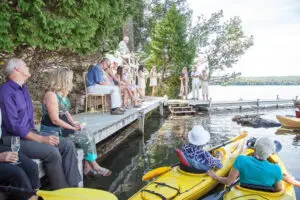
Here in Vermont we have an incredible range of options, from working farms in the Northeast Kingdom to lakeside lodges on Champlain. If you’re planning a destination elopement or small ceremony here, Vermont elopement inspiration can help you picture what’s possible
5. Ask Vendors the Right Questions About Small Events
Not every vendor is experienced with, or enthusiastic about, small events. A caterer who thrives at 200-person galas may struggle to scale a menu gracefully for 18.
Ask pointed questions before you book:
- “What are your minimums, and are there extra fees for smaller groups?” Some caterers charge a per-head premium below a certain count.
- “Can you share a sample menu scaled to 20 or 30 guests?” This tells you quickly whether they’ve actually done it before.
- “What’s your weather backup plan, and do we need permits?” Critical for outdoor ceremonies, especially in Vermont where April can feel like three different seasons in a single afternoon.
• • For photographers: “How do you handle small-group coverage? do you offer scouting, a second shooter, or timeline help?”
6. Choose Seating That Sparks Conversation
At a large wedding, seating is logistics. At an intimate wedding, it’s design and it’s one of the easiest ways to shape the feeling of the day.
Consider:
- Round tables: Everyone faces each other. Natural for conversation, warm in photos.
- Single long communal table: Feels like a long dinner with your favorite people. Excellent for ceremony-to-dinner flow.
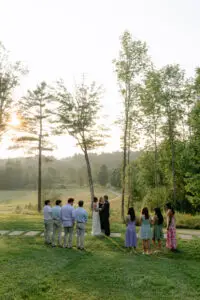
- Semi-circle ceremony setup: Focuses attention on the couple while leaving clear sight lines for your photographer.
Avoid long rows of chairs facing forward if you can. They signal audience, not community.
And before you even ask, YES, you need a seating chart! Your people want to be guided through your day. Guests are not use to finding their own seat at a wedding.
With fewer guests, every design choice reads more clearly. Decor that might disappear into a large room becomes genuinely intentional at 20 or 30 people.
What works beautifully at intimate scale:
- Low centerpieces — so guests see each other, not floral arrangements
- Single-stem local blooms in thrifted glass — especially gorgeous in Vermont in late summer and fall
- Clustered votives and candles at varied heights — they warm faces in photos and create that unmistakable golden-hour-indoors feeling
- Textured linen runners or mix-and-match napkins — visual interest without visual clutter
- A small memory table with printed photos and a guest note jar — personal, conversation-starting, and it shows up beautifully in candid portraits
Hand-lettered place cards on heavy paper are one of my favorite small details. They feel considered, they photograph well, and guests often keep them. I have a few in my office as a remind from some of my favorite people.
8. Build In Short Participatory Rituals
One of the best things about a small guest count is that you can actually involve people, not just have them watch. From the moment you told your people “we’re getting married!” they have been waiting for your ceremony moment. Don’t rush it.
Short participatory rituals to consider:
- Ring warming: The rings are passed through guests’ hands during the ceremony, each person holding them briefly and offering a silent wish.
- Memory sharing: Invite one or two guests to share a short story or reading.
- Handfasting: A traditional cord-binding ceremony that photographs beautifully and feels ancient and meaningful.
- Shared first toast: The couple and guests raise a glass together immediately after vows, no waiting until the reception.
Keep cues clear so transitions stay smooth. A two-minute participatory ritual that lands feels far more powerful than a ten-minute one that loses the room.
9. Build a Calm Realistic Timeline
At big weddings, a rushed timeline gets absorbed by the scale. At an intimate wedding, everyone feels it. A timeline that’s too tight turns your ceremony into a production — which is exactly what you were trying to avoid.
A few timeline principles that make a real difference:
- Build in buffer between ceremony, portraits, and dinner — at least 20 minutes more than you think you need
- Schedule your first look before the ceremony if you want unhurried couple portraits and emotional spaciousness
- Golden hour portraits are worth protecting — in Vermont, late afternoon light in the hills or on the water is something else entirely
- Let toasts breathe — don’t stack them before people have eaten
I offer timeline input to all my couples before the day. It’s one of the most useful things I do. A great timeline is quiet infrastructure, you don’t notice it, but it’s what makes everything feel relaxed and real.
I offer timeline input to all my couples before the day. It's one of the most useful things I do.
A great timeline is quiet infrastructure,
you don't notice it, but it's what makes everything feel relaxed and real.
With a smaller guest list, your per-person budget often goes further. Let me tell you there will be the temptation to fill that space with decor. Resist, my friend.
The two things that show up most in memories (and in photographs) are food and people. So spend the budget on:
- A meal worth lingering over. Unhurried food is one of the great pleasures of a small wedding
- A photographer who understands small-group events not just someone who can photograph a crowd, but someone who knows how to quietly find the little details and magical moments between you and your favorite people.
For context on what couples typically allocate across their wedding budget, the average cost of a wedding is might be helpful starting point for you to check out, though intimate small weddings often look quite different from those numbers.
Looking for your photographer?
Are you dreaming of a small ceremony in Vermont?
or you’re a Vermont couple figuring out what “intimate” actually looks like in practice, let’s talk. A 20 minute voice or video consult with Lindsay is a good place to turn ideas into a practical plan.
And for ongoing planning inspiration, Vermont wedding stories, and behind the scenes notes on what actually makes a small day work, visit the blog.